Top 10 Essential Tools for Every Home Repair Kit (and Why Owning Them Is an Act of Sustainability)
Why a Well-Stocked Repair Kit Is a Sustainability Statement
Owning the right tools is one of the most direct ways to participate in the circular economy. Every repair you make at home — a leaky faucet, a broken chair leg, a cracked tile — is an item that doesn't end up in a landfill. That's not a small thing.
The culture of planned obsolescence has conditioned many of us to replace rather than repair. Products are designed with shorter lifespans, and without the tools or confidence to fix them, most people default to buying new. A well-equipped repair kit breaks that cycle.
The right to repair movement has been gaining serious momentum globally, pushing for legislation that makes it easier for individuals to fix their own electronics, appliances, and goods. But legislation alone doesn't empower you — having the right tools does. When you can actually fix things, you're not just saving money. You're reducing demand for new manufacturing, cutting down on packaging waste, and extending the life of durable goods that already exist.
Think of your repair kit as a long-term investment in a repair-first lifestyle, not a one-time purchase.
How to Choose Tools That Last (and What to Avoid)
The best tools for a sustainable repair kit are multi-use, durable, and repairable themselves. Cheap single-purpose tools contradict the very philosophy they're meant to support — they break quickly, can't be serviced, and create the same waste problem you're trying to avoid.
When evaluating any tool, ask three questions: Does it handle more than one type of repair? Is it made from materials that will hold up over years of use? And if it breaks, can it be fixed or have parts replaced?
Tools with replaceable components — interchangeable bits, replaceable blades, modular heads — are almost always worth the slightly higher upfront cost. A good adjustable wrench or a quality multi-bit screwdriver set will outlast a drawer full of cheap alternatives.
Avoid tools marketed as "kits" with 50+ pieces at suspiciously low prices. These often include redundant items, flimsy materials, and sizes you'll never use. A minimal, intentional kit built around genuine versatility will serve you far better.
The Top 10 Essential Tools for Every Home Repair Kit
These ten tools cover the vast majority of common household repairs, from furniture fixes to plumbing basics to wall patching. Each earns its place by handling multiple job types.
1. Claw Hammer
The claw hammer drives and pulls nails, but it also pries apart furniture joints, opens paint cans, and helps with light demolition. A 16-oz steel or fiberglass-handled model is the standard starting point for most households.
2. Multi-Bit Screwdriver Set
A single handle with interchangeable flathead and Phillips bits replaces an entire drawer of individual screwdrivers. Look for a set that also includes Torx and square drive bits — these appear more often than most people expect on appliances and furniture hardware.
3. Adjustable Wrench
One good adjustable wrench handles plumbing connections, furniture bolts, and bike repairs. A 10-inch model covers most residential fastener sizes without requiring a full socket set.
4. Needle-Nose Pliers
These are indispensable for reaching into tight spaces, bending wire, gripping small components, and pulling nails in awkward positions. They're also essential for basic electrical work like connecting wires to terminals.
5. Utility Knife
With replaceable blades, a utility knife handles drywall scoring, carpet cutting, stripping packaging, and precision trimming. The blade replacement model is a perfect example of a repairable tool — you never need to replace the whole thing.
6. Tape Measure
A 25-foot retractable tape measure is the foundation of any repair or installation job. Measure twice, cut once — this rule applies whether you're hanging a shelf or patching a floor.
7. Cordless Drill/Driver
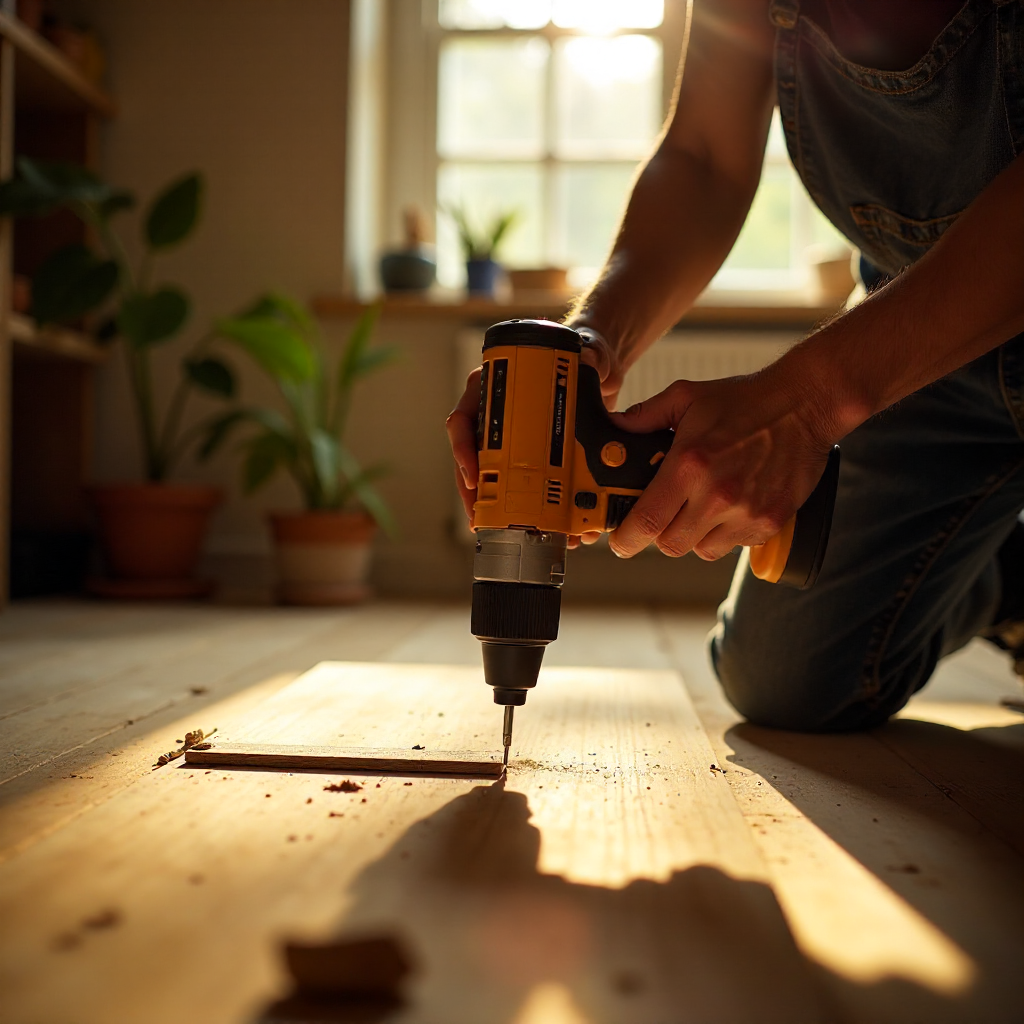
A mid-range cordless drill with a lithium-ion battery is one of the highest-leverage tools in any kit. It drives screws, drills holes, and with the right attachment, sands or mixes. Choose a model with a replaceable battery — battery degradation is the most common reason drills get discarded, and a replaceable pack extends the tool's life by years.
8. Level
A 24-inch spirit level ensures shelves, frames, and fixtures are installed correctly the first time. Crooked installations often need to be redone — wasting materials and effort. A good level prevents that.
9. Putty Knife
For wall patching, scraping old caulk, spreading filler, and lifting floor tiles, a flexible putty knife is essential. It's one of the cheapest tools on this list and one of the most frequently used in home maintenance.
10. Multipurpose Adhesive or Repair Tape
Strong adhesive tape — whether that's duct tape, gaffer tape, or a foam-backed repair tape — handles temporary fixes, sealing, bundling, and reinforcement across dozens of contexts. Keep at least one roll in your kit at all times.
Borrow Before You Buy — Tool Libraries and Repair Exchanges
Tool libraries and repair exchanges are real, practical infrastructure that let you access tools without owning them — and they're more widespread than most people realize. Before purchasing any tool you'll use fewer than five times a year, it's worth checking whether one is available to borrow.
The Library of Things model has expanded significantly in recent years, with community organizations, public libraries, and makerspaces offering tool lending programs. A circular saw, a tile cutter, a pipe wrench — these are exactly the kinds of specialized tools that make more sense to borrow than own.
Repair cafés take this a step further. These community events bring together volunteers with tools and skills to help people fix items they'd otherwise discard. Many also lend tools on-site. They're worth knowing about both as a resource and as a community to participate in — skilled repair knowledge is shared, not hoarded.
The practical rule: if you'll use a tool more than a few times a year, own it. If you'll use it once for a specific project, borrow it. That distinction alone can cut the size of your kit in half while covering the same range of repairs.
Sourcing Tools Secondhand — What to Look For
Buying refurbished or used tools is one of the most direct ways to support the repair-exchange economy — and it often means getting better quality for less money. Many vintage hand tools, especially from mid-20th century manufacturers, are more durable than their modern equivalents.
When evaluating a secondhand tool, focus on three things: structural integrity, moving parts, and handle condition. A hammer with a cracked handle is unsafe but easily repaired with a replacement handle. Pliers with stiff joints just need cleaning and lubrication. Rust on a blade surface can often be removed with steel wool and oil.
What to avoid: tools with cracked metal (not surface rust, but structural fractures), stripped screw mechanisms that no longer grip, or electrical tools with frayed cords and no clear service history. Safety is non-negotiable.
Good sources for secondhand tools include estate sales, local buy-nothing groups, Freecycle networks, and dedicated tool resale shops. Some repair cafés and community workshops also sell or give away donated tools to people building their first kit.
Maintaining Your Tools So They Last Decades
Tool longevity depends almost entirely on how they're stored and maintained. A well-cared-for hand tool can last a lifetime — several lifetimes, actually, given how many old tools are still in active use today.
The basics of preventive maintenance for a home toolkit are straightforward. Keep metal surfaces dry and lightly oiled to prevent rust. Store tools in a dry location, ideally in a roll bag or wall-mounted holder rather than a damp garage bin. Clean blades after use. Tighten loose handles before they become a safety issue.
For power tools, the battery is usually the first thing to fail. Store lithium-ion batteries at partial charge (around 40-60%) if you won't be using the tool for extended periods — this significantly slows capacity degradation. Clean vents regularly so motors don't overheat.
Sharpening is another underrated skill. A dull utility blade doesn't just work poorly — it's more dangerous because it requires more force. Replacing blades regularly (they're cheap) and learning to sharpen chisels or plane blades extends the life of cutting tools considerably.
Building Your Kit Gradually — A Repair-First Mindset
You don't need all ten tools on day one. Start with what you'll actually use, and add intentionally as specific repairs demand it. That's how a functional kit gets built — through use, not through a single shopping trip.
A reasonable starting point for most households: a hammer, a multi-bit screwdriver set, a tape measure, and a utility knife. These four tools handle a surprising range of basic repairs and installations. Add an adjustable wrench and needle-nose pliers when plumbing or electrical work comes up. The cordless drill can wait until you have a project that genuinely requires it.
This gradual approach also prevents the common mistake of buying tools speculatively — purchasing items you imagine you'll need, only to find them unused years later. Every tool in your kit should have a clear, recent use case.
The repair-first mindset isn't about having everything. It's about having the right things, knowing how to use them, and choosing to fix rather than discard. That's a philosophy that scales — from a single loose screw to a broader commitment to consuming less and caring more for what you already own.
Frequently Asked Questions
What is the single most useful tool for a beginner repair kit?
A multi-bit screwdriver set is the most universally useful starting point. The majority of household repairs — assembling furniture, tightening hinges, replacing outlet covers, fixing appliances — involve screws. One quality handle with interchangeable bits covers flathead, Phillips, Torx, and square drive without requiring multiple tools.
Can I borrow tools instead of buying them — where do I start?
Yes, and it's often the smarter choice for rarely-used tools. Start by searching for a tool library or Library of Things program in your area. Many public libraries now offer tool lending alongside books. Local makerspaces, community workshops, and repair cafés are also good places to access tools and get hands-on help with repairs.
How do I know if a secondhand tool is still safe to use?
Check for structural cracks in the metal or handle, test that moving parts (hinges, jaws, adjustment mechanisms) work smoothly, and inspect any electrical components for damaged cords or exposed wiring. Surface rust is usually cosmetic and removable. Structural damage is not. When in doubt about an electrical tool, have it inspected before use.
What tools are worth investing in versus borrowing occasionally?
Invest in tools you use multiple times a year: hammer, screwdrivers, pliers, tape measure, utility knife. Borrow tools for one-off projects: tile saws, pipe cutters, power sanders, scaffolding. The general rule is frequency of use — if a tool will sit idle for 11 months, borrowing is almost always the better choice for your wallet and the planet.
How does repairing at home reduce my environmental footprint?
Manufacturing new products consumes raw materials, energy, and water — and generates emissions throughout the supply chain. Every item you repair instead of replace avoids that entire production cycle. Repairing also reduces packaging waste and keeps functional materials out of landfill. The EPA and environmental researchers consistently identify extending product lifespans as one of the highest-impact individual actions available to consumers.