The Environmental Cost of Planned Obsolescence in Tech Gadgets
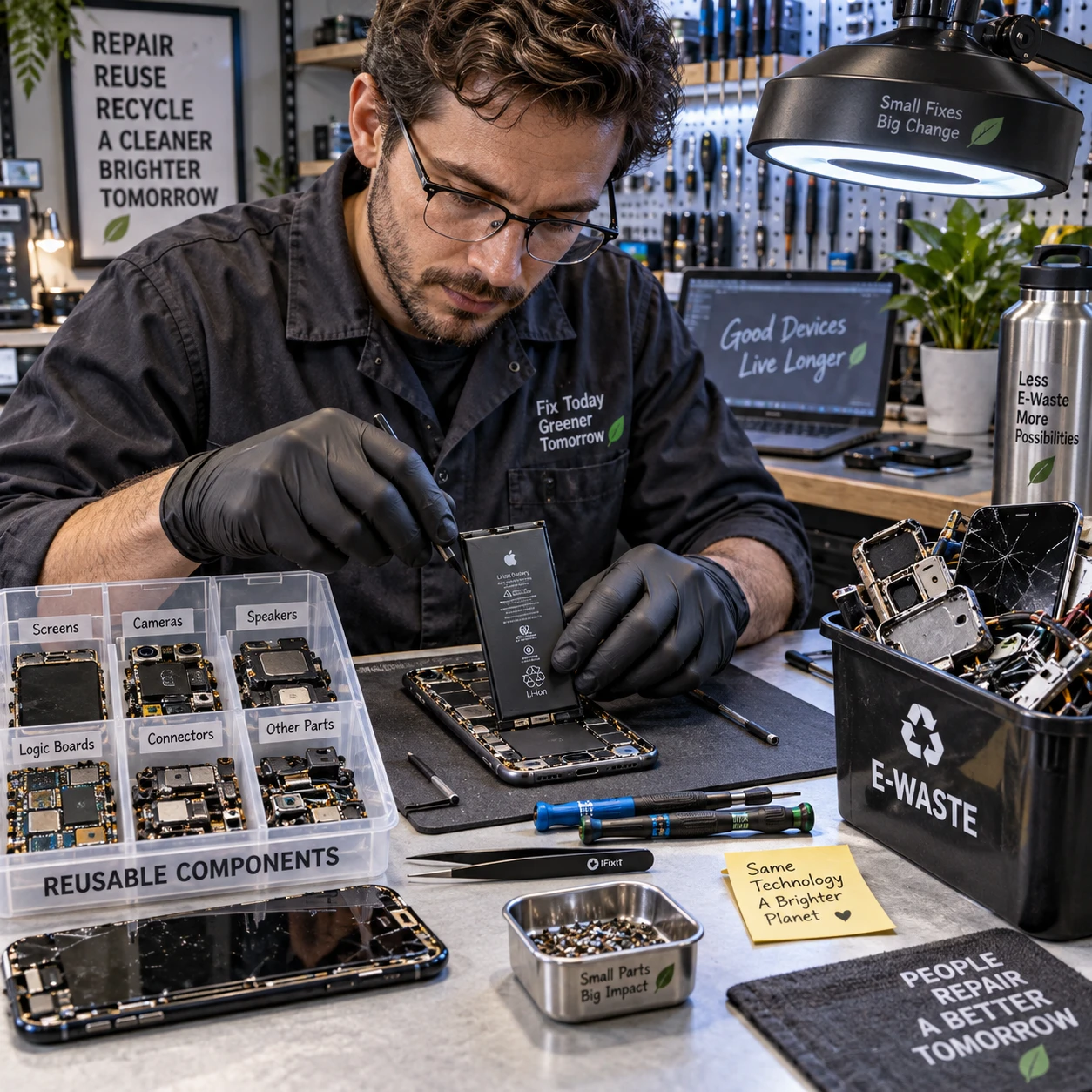
When a phone, laptop, or pair of wireless earbuds stops meeting everyday needs, replacing it can feel inevitable. Sometimes a device has reached the end of its useful life. In other cases, a worn battery, discontinued software support, or unavailable repair information turns a fixable problem into a replacement decision.
This is where planned obsolescence and the environmental cost of short product lifespans come into focus. Extending a gadget’s useful life through maintenance, repair, reuse, and refurbishment can reduce demand for new materials and slow the flow of electronic waste. Recycling still matters, but it works best as part of a wider circular approach.
What planned obsolescence looks like in tech
Planned obsolescence in technology refers to choices that shorten a gadget’s useful life or make continued use less practical. It can stem from product design, software decisions, or limits on repair and support, though not every failure or upgrade is deliberate.
Design-related obsolescence can occur when a common wear part, such as a battery, is glued in place, or when a low-cost component failure makes an entire device difficult to fix. Some products also lack replaceable parts, even when a modular design could let owners swap a damaged component.
Software can affect lifespan too. An operating system update may demand more storage or processing power than an older device can comfortably provide. Security updates may end, or an essential app may stop supporting an outdated operating system. These changes can leave hardware that still works physically less useful or less safe to use online.
Support decisions matter as well. Manufacturers may stop supplying parts, diagnostic tools, or repair manuals. That can make a repair costly or impossible outside an authorized service network. However, a device becoming slow over time does not prove intentional design, and product improvements do not automatically amount to planned obsolescence. The key question is whether practical choices unnecessarily prevent a functioning product from serving its owner.
The environmental cost of replacing gadgets early
Replacing gadgets early increases environmental pressure because each new product requires materials, manufacturing, and transport, while the old one may become electronic waste. A longer product lifespan can help avoid some of that new production, especially when a repair restores the device’s everyday function.
Phones, computers, and other electronics contain materials obtained through resource extraction, including metals used in batteries, circuit boards, and screens. Mining and processing can disturb land, consume energy and water, and create pollution. Manufacturers then use additional energy and materials to build, package, and ship finished products.
When a device is discarded, it joins the growing stream of electronic waste (e-waste). Some e-waste is collected for recycling, but collection and recovery are not universal. Devices can also be exported, stored unused in drawers, or handled in ways that expose workers and communities to hazardous substances. Even responsible recycling cannot recover every material or erase the impacts of manufacturing.
The lifecycle perspective helps explain why keeping a device in use matters: environmental impacts occur before the first day of ownership, not only at disposal. A repair is not automatically the greener choice in every case; the condition of the device, the repair needed, and whether it will remain useful all matter. But for a sound device with a replaceable battery or screen, repair may avoid the need to manufacture a full replacement.
Why some devices are harder to repair than others
Devices are harder to repair when their parts, fasteners, software, or documentation make routine fixes difficult. Sealed construction, restricted parts, and limited repair information can turn a small fault into an expensive service or early replacement.
Adhesives can make batteries and screens difficult to remove without damage. Tiny or unusual screws may require special tools, while components soldered onto a board can prevent a straightforward replacement. In some designs, a single damaged part is bundled with several working components, increasing the cost and waste of the repair.
Access to parts is only one barrier. Manufacturers may limit access to diagnostic software, calibration tools, or repair manuals. Parts pairing can also mean that a replacement component needs manufacturer authorization or configuration before it works correctly. These rules may support security or quality control in some cases, but they can also restrict independent repair when equivalent safeguards are possible.
The right to repair movement advocates for practical access to parts, tools, and repair information so consumers and independent repair shops can maintain products. Repairability does not mean every owner should open every device: lithium-ion batteries, high-voltage components, and fragile displays can require trained technicians. Good design makes safe repair possible and gives people a reasonable choice of service provider.
Repair and reuse as practical alternatives
Repair and reuse extend a gadget’s useful life by fixing faults, passing working devices to new users, and reserving recycling for products that cannot be used again. A repair-first approach can reduce early replacement, though the right option depends on safety, cost, and the device’s remaining usefulness.
Start with low-risk maintenance: keep charging ports clear, use protective cases where they help prevent damage, and install supported security updates. If battery life has fallen sharply or a screen has cracked, check the repair cost and parts availability before buying a replacement. For a simple comparison, consider the device’s age, expected remaining support, repair warranty, and whether the fix restores the functions you need.
When a repair is not practical, reuse and refurbishment can keep a working device in circulation. A laptop that no longer suits one person’s workload may still serve a student or community organization. Before resale or donation, back up files, sign out of accounts, and securely erase personal data. Refurbished devices should be tested, repaired where needed, and clearly described so the next owner knows their condition.
Recycling is the appropriate next step when a gadget is unsafe or beyond repair. Use a qualified collection or take-back program, and remove personal data first. Recycling recovers some materials and helps keep electronics out of ordinary waste, but it should not be treated as a complete substitute for repair and continued use.
Designing tech for a longer life
Circular design reduces waste by making products durable, repairable, upgradeable, and easier to reuse or recycle. It considers what happens throughout a gadget’s life, from material selection and manufacturing to maintenance and end-of-use recovery.
Durability starts with components that can withstand ordinary wear, plus construction that allows a technician to replace common failure points. Modularity can help when it lets users replace a battery, storage drive, or port without discarding a working device. It also has trade-offs: extra connectors and separate modules may add cost, bulk, or complexity, so modularity should solve real repair needs rather than exist as a design feature on paper.
Replaceable components are most useful when manufacturers keep spare parts available and publish clear repair instructions. Ongoing software support is equally important: security updates and compatible applications can preserve a device’s usefulness after its hardware remains capable. Support timelines should be clear at purchase, and updates should be designed with older models’ storage and processing limits in mind.
Circular design also plans for reuse and refurbishment. Manufacturers can build devices that are easier to test, disassemble, clean, and resell, then recover materials from products that truly have no further use. This approach can require upfront investment and careful product planning. Its environmental value depends on whether products actually last longer and whether recovered parts and materials find a useful next destination.
What consumers and manufacturers can do
Consumers can reduce the environmental cost of gadget replacement by choosing repairable products, maintaining devices, and considering used or refurbished options. Manufacturers can help by designing for repair, providing long-term parts and software support, and making reuse and recycling channels accessible.
For consumers
- Check repairability before buying. Look for replaceable batteries, available spare parts, repair guides, and a stated software-support period.
- Use a repair-first decision. Get a quote for a common fix, such as a battery or screen replacement, and compare it with the cost and expected life of a suitable replacement.
- Keep useful devices in circulation. Sell, donate, or pass on functioning gadgets after backing up and erasing personal data.
- Recycle responsibly. Use a recognized electronics collection program for devices that cannot be safely repaired or reused.
For manufacturers
- Design common wear parts for safe replacement and avoid adhesives or proprietary fasteners where they create needless repair barriers.
- Make spare parts, diagnostic tools, and clear repair information available to owners and independent repair providers.
- Set transparent software-support commitments and maintain security updates for as long as devices remain in active use.
- Build take-back, refurbishment, and material recovery programs that prioritize reuse before recycling.
There is no single action that eliminates the environmental impact of electronics. Still, longer product lifespans give repair, reuse, and refurbishment a chance to reduce demand for new production, while better recycling manages the material that remains. The strongest results come when consumers have repair options and manufacturers design gadgets to make those options practical.