Interview with a Circular Economy Expert: Future Trends in Repair and Design
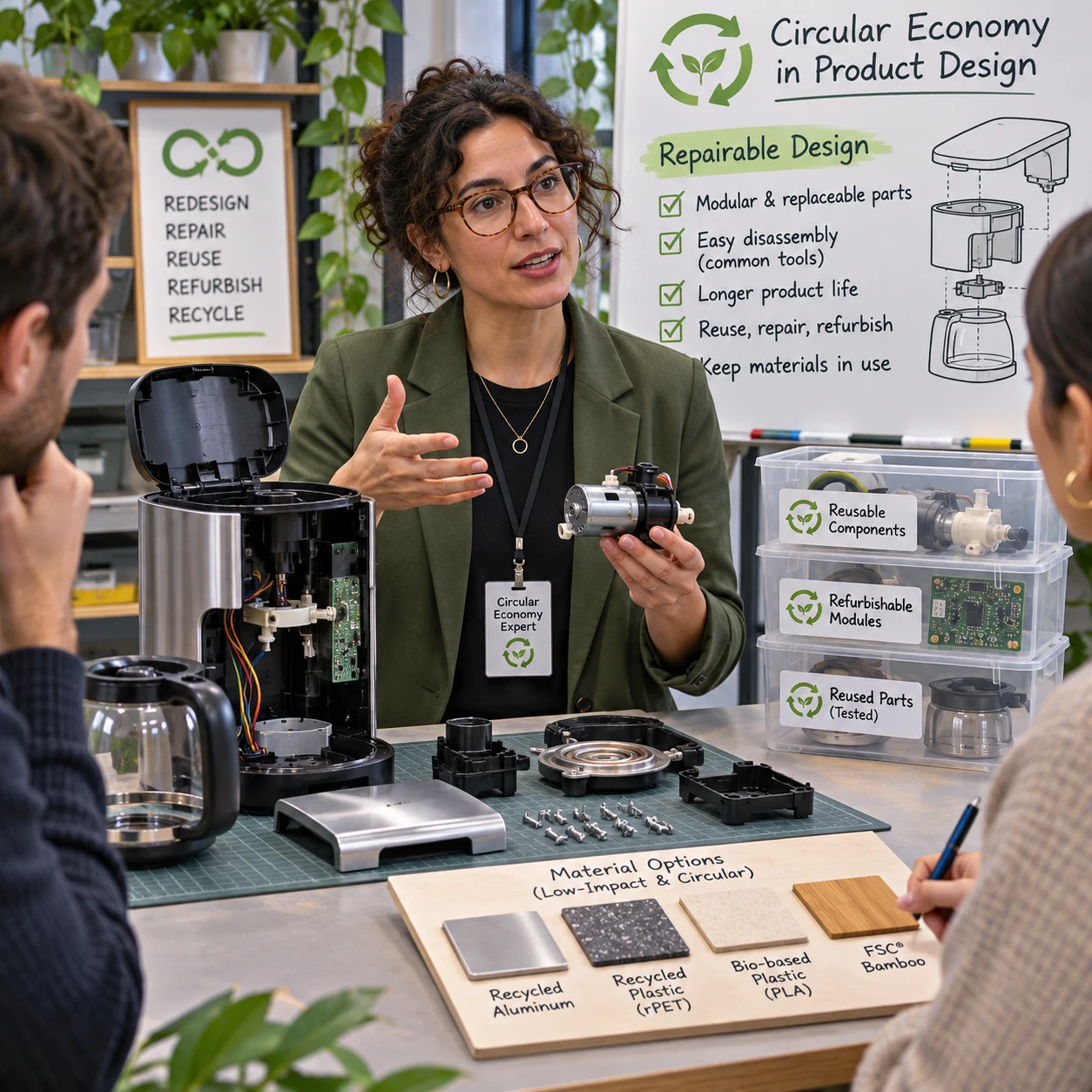
What will make circularity part of everyday life: better recycling, longer-lasting products, or easier repair? We asked a circular economy expert to consider the trends reshaping product design and the decisions businesses and consumers can make now.
The conversation focuses on practical change rather than distant predictions. Some approaches, such as repair services and refurbishment, are already in use. Others are emerging and will depend on policy, infrastructure, and whether companies can make circular options convenient and viable.
What the circular economy means today
A circular economy keeps products, components, and materials in use at their highest practical value for as long as possible. It replaces the linear take-make-dispose pattern with strategies such as durability, reuse, repair, remanufacturing, and, when other options are exhausted, material recovery.
We asked the expert how that definition changes the way a company sees a product. “The first question should be what value is being lost when the product is discarded,” they said. “Sometimes the product needs a repair. Sometimes a component can serve again, or a material can be recovered. Recycling matters, but it is often a later option, not the whole circular economy.”
This distinction affects the full product lifecycle, from material selection and manufacturing to maintenance, resale, and end-of-life handling. Circular design considers those stages together. A durable object that cannot be opened or maintained may still become waste early; a recyclable product can also waste the energy and labor invested in its manufacture if it is discarded before its useful life ends.
In practice, circularity is a set of choices, not a single label. A business might extend product life through repair, then collect worn units for refurbishment or remanufacturing, and recover materials from components that cannot be used again. The appropriate route depends on the product, its materials, and the systems available to bring it back.
Trends shaping the future of circular design
The strongest circular design trends focus on products that last, come apart predictably, and can move through more than one use cycle. Designers are paying closer attention to durability, replaceable components, material choices, and the information needed to maintain products.
We asked which design changes could make the biggest practical difference. The expert pointed to **planned disassembly**: designing a product so a technician can identify and remove the parts most likely to wear out without damaging components that still work. Fasteners that can be accessed with standard tools, clear material markings, and modular assemblies can all help.
That approach has to be product-specific. A modular design may simplify repair, yet add joints, weight, or cost. A product intended to withstand years of use may require more upfront material. Designers need to weigh these choices against expected service life, maintenance needs, and what happens after the first owner is finished with it.
Another trend is designing with the next user in mind. Reuse and resale work better when products remain attractive, functional, and easy to inspect. Digital product information may also help repairers and later owners find maintenance guidance, component specifications, or material details. Such systems are useful only if the information stays accessible and accurate over time.
The expert’s advice to design teams was direct: “Start with the failure points. Which parts wear out first? Can they be replaced? What information would a repairer need?” These questions turn circular design from an abstract ambition into a set of testable design requirements.
Repair as a driver of circularity
Repair supports a circular economy by restoring a product’s function and delaying the need to replace it. It works best when spare parts, repair information, tools, and qualified services are available at a reasonable cost.
We asked what separates a repairable product from one that is merely possible to repair. The expert emphasized the full repair experience: “A product is repairable in practice when someone can diagnose the fault, access the failed part, get the right component, and put it back together safely.” A product that can technically be opened but requires unavailable parts or specialized equipment may remain out of reach for most owners.
This is where the right to repair enters the discussion. Laws and policies vary by location and product category, but the broader issue is access: whether consumers and independent repairers can obtain parts, instructions, and diagnostic tools. The [European Commission’s repair policy information](https://commission.europa.eu/law/law-topic/consumer-protection-law/consumer-contract-law/promoting-repair-consumers_en) describes EU measures intended to make repair easier for consumers. Rules can help, though effective repair still depends on practical access and a functioning service network.
Repair shops, community workshops, and manufacturer service programs each have a role. Local repairers can offer nearby expertise; community spaces may help people learn basic maintenance; and manufacturers can provide parts and technical guidance. No single route fits every product. Safety-critical equipment, for example, may require trained technicians, while simpler items can be suitable for owner repair.
Consumers can support repair by checking availability of parts and service before buying, keeping maintenance records, and acting when a small fault first appears. Delaying a simple fix can allow wear to spread, making a low-cost repair more difficult later.
Business models that keep products and materials in use
Circular business models keep value in use through services such as repair, resale, refurbishment, remanufacturing, and product leasing or subscription. Their success depends on designing products and operations to recover items efficiently, not merely offering a return program.
We asked the expert which models are gaining attention. They described a progression: repair a product for its current owner, refurbish it for a new user, remanufacture it when major components need rebuilding, and recover material when further use is no longer practical. Each step can preserve different kinds of value, from the whole product to individual parts or raw materials.
Product-service models can align a company’s interest with product longevity. If a provider retains ownership and earns revenue from continued use, maintenance may become a business priority. But leasing is not automatically circular. It needs durable products, sensible collection and logistics, and a plan for what happens to returned items. Without those elements, extra transport or low return rates can undermine the intended benefit.
Reuse and refurbishment can also open access to lower-cost products, but condition and quality need clear communication. A buyer should know what has been inspected, repaired, or replaced. For businesses, consistent grading and traceable service records can make second-life products easier to trust and resell.
The expert recommends measuring outcomes that match the model: how many products are repaired, how long they remain in service, what share of returned units are reused, and how much material is recovered. These indicators help distinguish a working circular system from a campaign that collects products without keeping their value in use.
Barriers and tensions to address
The main barriers are cost, limited repair and recovery infrastructure, consumer expectations, and design choices that make products difficult to maintain. Circular practices can reduce waste and preserve value, but they require investment and do not suit every product or market in the same way.
We asked where companies most often underestimate the challenge. “They focus on the product and forget the system around it,” the expert said. A repairable design needs parts inventory, service capacity, useful instructions, and a way to get products to repairers. A refurbishment program needs inspection standards, reverse logistics, and buyers for returned goods.
Price creates another tension. Repair can be cheaper than replacement, but labor and parts may make it more expensive for the consumer in some cases. Lower upfront prices can also make replacement seem attractive, even when a more durable product costs less over a longer period. Businesses can respond with transparent repair pricing, warranties, and clear comparisons of total ownership costs, while recognizing that not every customer can afford a higher initial price.
Consumer habits matter, too. Convenience, confidence, and trust influence whether people choose a repaired or refurbished item. Clear condition labels and dependable service help; vague claims do not. Companies should avoid assuming that awareness alone will change behavior when the circular option is hard to find or use.
Finally, material recovery has limits. Products made from mixed or bonded materials can be difficult to separate, and a recycling route may not exist locally. Designers should check actual collection and processing capabilities rather than rely on a material’s theoretical recyclability.
What businesses and consumers can do next
Businesses and consumers can advance circularity by choosing one practical intervention, measuring whether it extends product use, and improving the system around it. For a company, that may mean redesigning a high-failure component; for an individual, it may mean repairing, maintaining, or buying a product with accessible service.
We asked the expert what they would tell a design team beginning this work. Their first step was to map how a product currently fails and what happens after use. Then identify a change that can be tested, rather than trying to redesign the whole business at once.
- For designers: identify common failure points, specify replaceable wear parts, use accessible fasteners where appropriate, and document disassembly and repair.
- For business leaders: pilot repair or refurbishment for one product line, track return rates and repair outcomes, and make parts and service information available for a realistic period.
- For consumers: check repair options before purchase, maintain products according to guidance, and consider repair or reputable resale before replacing an item.
- For policymakers and industry groups: support repair skills, collection systems, consistent product information, and infrastructure suited to local needs.
The expert cautioned against treating a pilot as proof that a model will work at scale. A trial can reveal which parts fail, what customers will pay, and where logistics break down. Those findings should guide the next investment. The useful question is not simply whether a product is circular, but which intervention keeps the most value in use under real conditions.
Frequently asked questions
What is circular design?
Circular design is the practice of designing products and services to reduce waste and keep products, components, and materials useful over time. It can include durability, repairability, reuse, remanufacturing, and material recovery.
How does repair support a circular economy?
Repair restores a product’s function and can extend its useful life, preserving the labor and materials already invested in it. Its impact depends on whether parts, skills, information, and affordable services are available.
What makes a product easier to repair?
Accessible fasteners, replaceable components, available spare parts, clear diagnostic and repair instructions, and standard tools can make repair easier. Safety and product performance still matter, so design choices should fit the product’s intended use.
Which circular economy trends should businesses watch?
Businesses should watch repair and refurbishment services, products designed for disassembly, reuse and resale systems, remanufacturing, and product-service models. The right priorities depend on product lifespan, customer needs, and the local infrastructure for returns and recovery.