How Circular Design Principles Are Transforming Product Manufacturing
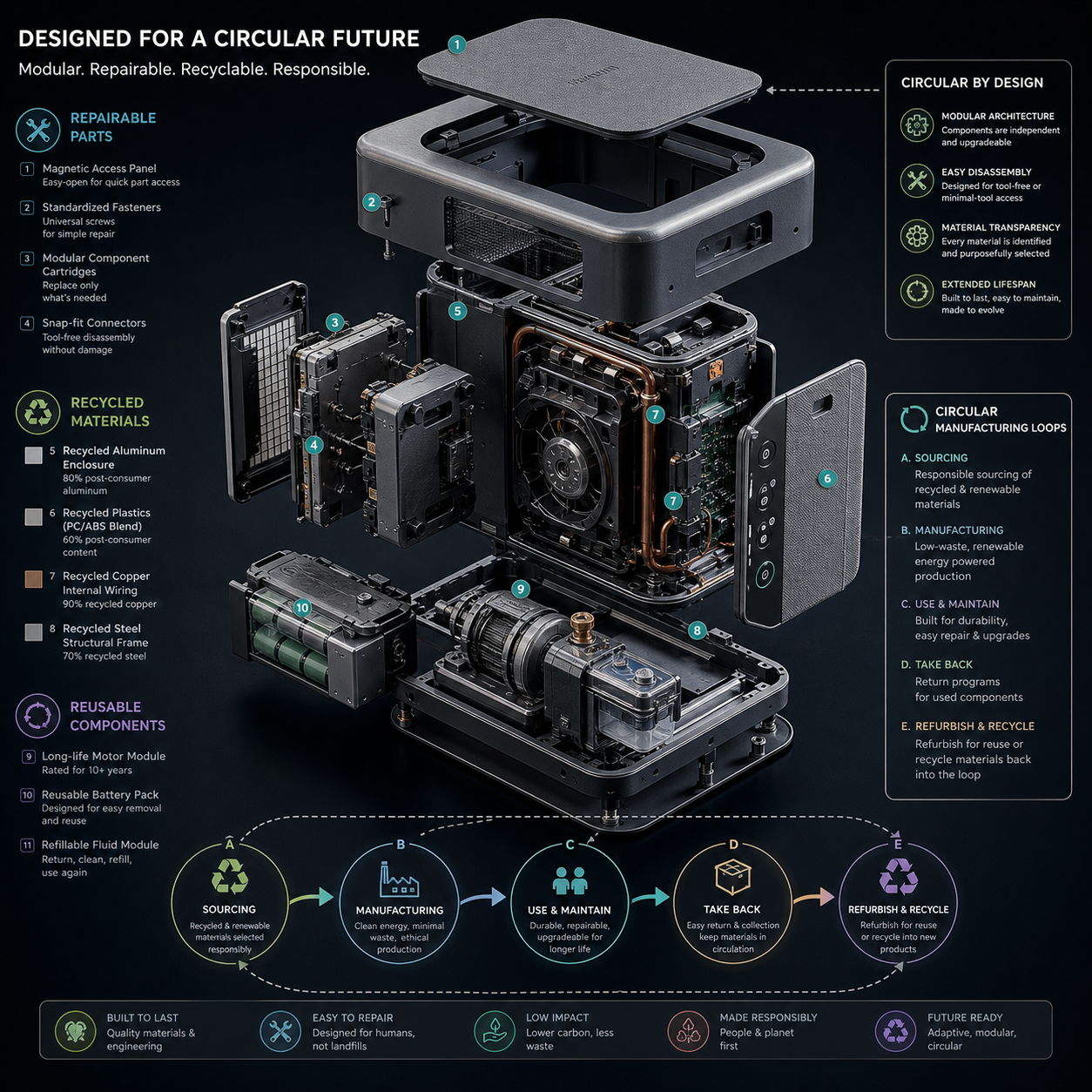
Circular design principles are changing product manufacturing by keeping products, components, and materials useful for longer. Instead of treating a product as a one-way journey from raw material to factory, consumer, and landfill, manufacturers are designing for repair, upgrade, reuse, refurbishment, and responsible recovery from the start.
What Is Circular Design?
Circular design is an approach to creating products that remain valuable and functional throughout multiple use cycles. It replaces the traditional take-make-dispose model with a lifecycle-focused system that aims to reduce waste and keep resources in circulation.
In a linear model, manufacturers extract materials, produce goods, sell them, and eventually discard them. Recycling may occur at the end, but it is often difficult when products contain mixed materials, adhesives, sealed batteries, or inseparable electronic assemblies.
Circular design considers what happens at every stage of the product lifecycle:
- Where materials come from and whether they are recycled or renewable
- How efficiently materials and energy are used during production
- How long the product can perform reliably
- Whether owners or technicians can maintain and repair it
- Whether components can be reused or refurbished
- How easily materials can be separated and recovered at end of life
The goal is not to make every product endlessly recyclable. A more useful priority is to preserve the highest-value option available: continued use of the complete product, followed by repair, refurbishment, component reuse, and material recycling.
Why Product Design Is Central to Circular Manufacturing
Product design is central to circular manufacturing because decisions made before production determine durability, repairability, material use, and end-of-life outcomes. Once a product enters manufacturing, changing its architecture can become expensive and technically difficult.
A designer chooses whether a battery is replaceable or permanently sealed, whether a casing uses screws or glue, and whether a worn component can be changed without damaging neighbouring parts. These choices shape the product’s entire environmental and commercial performance.
For example, a durable appliance with a replaceable pump may stay in service after a single component fails. A cheaper appliance with an inaccessible pump may be discarded even when most of its materials and functions remain intact. The manufacturing impact of the second product includes the replacement item, new packaging, transport, and disposal of the original.
Design also influences material efficiency. Reducing unnecessary material, selecting compatible polymers, and avoiding permanent combinations of dissimilar materials can lower resource demand while making future recovery more practical. This is why circular manufacturing begins at the drawing board rather than at the recycling facility.
Key Circular Design Principles for Manufacturers
The main circular design principles are longevity, repairability, disassembly, modularity, reuse, recyclability, and efficient material use. Together, they create products that can retain value through several ownership and service stages.
Design for durability and longevity
Durability means more than making a product physically strong. It includes reliable performance, resistance to predictable wear, software support where relevant, and protection against common failure points. Manufacturers should test components under realistic use conditions and strengthen the parts most likely to fail.
Design for repair
Design for repair gives users or qualified technicians reasonable access to components that wear out or fail. Replaceable batteries, accessible filters, standardised fasteners, diagnostic features, and available spare parts can prevent a minor fault from ending a product’s life.
Design for disassembly
Design for disassembly makes it possible to separate parts without excessive time, damage, or hazardous processes. Screws, clips, and reversible joints generally support disassembly better than permanent adhesives, although adhesives can still have a role when engineers balance sealing, safety, and serviceability.
Use modular product architecture
A modular product architecture divides a product into replaceable or upgradeable sections. A manufacturer might allow a control module, battery, camera, motor, or storage component to be exchanged independently. Modularity can extend use, but it may add interfaces, seals, connectors, and engineering complexity.
Plan for reuse and recyclability
Designers should identify which components can be reused in another product and which materials can be recovered at the end of service. Clear material marking, compatible material families, and limited use of coatings can improve sorting and recycling. Recycling remains valuable, but it usually preserves less economic and functional value than direct reuse.
How Circular Design Is Changing Manufacturing Processes
Circular design changes manufacturing processes by connecting material selection, assembly, supply chains, maintenance, refurbishment, and reverse logistics. Production becomes part of a managed lifecycle rather than the final step before sale.
Material decisions now involve more than price and performance. Manufacturers may assess recycled content, renewable feedstocks, durability, toxicity, repair compatibility, and the likelihood of recovery. Recycled materials can reduce demand for virgin resources, but quality variation and contamination may require tighter specifications or additional processing.
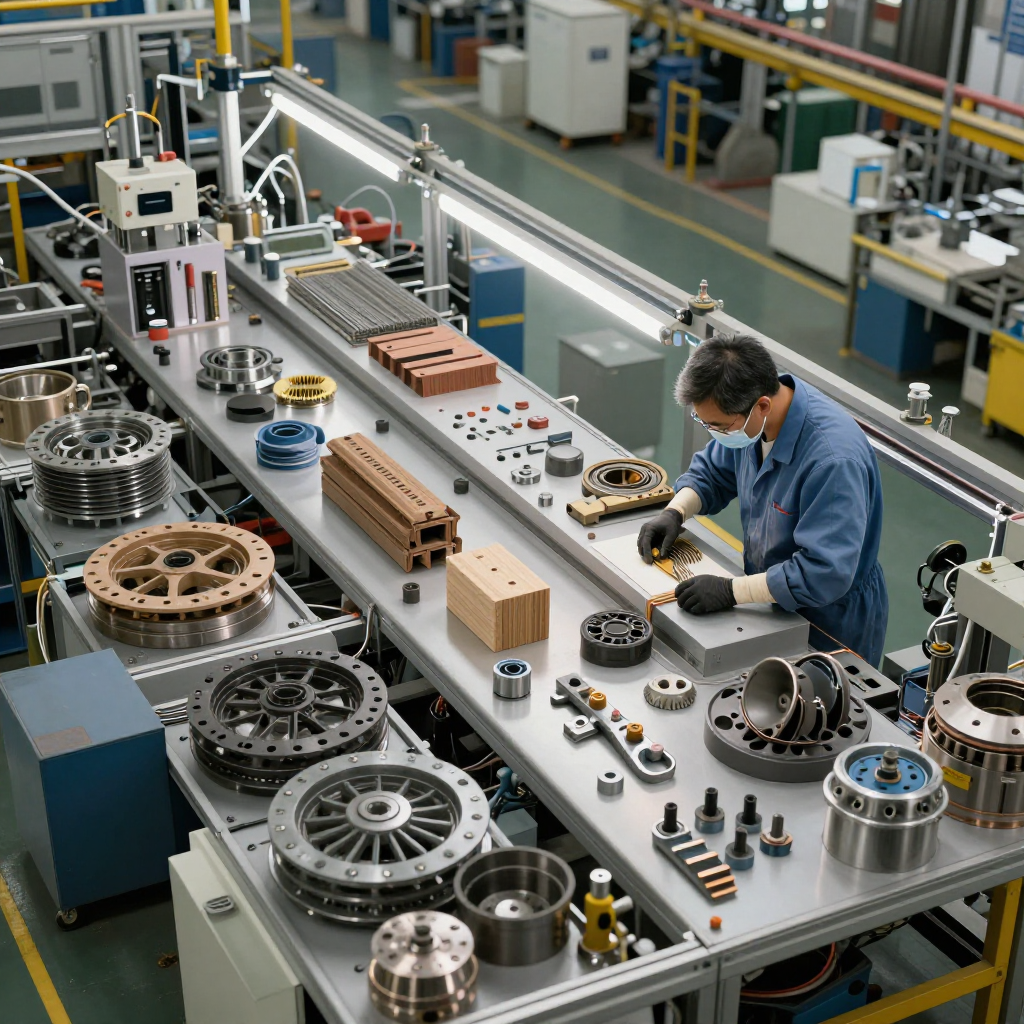
Assembly lines may also need new methods. Products designed for disassembly often require accessible fasteners, labelled connections, removable seals, and assembly sequences that technicians can reverse. This can affect tooling, worker training, quality control, and production time.
Supply chains change as well. A circular system may need suppliers for replacement parts, refurbishment centres, collection partners, and reverse logistics. Manufacturers must track returned products, grade their condition, recover usable components, and decide whether each item should be repaired, resold, harvested for parts, or recycled.
Maintenance data can support these decisions. Failure records reveal which components need redesign, while product identification systems can help service teams find compatible parts and repair instructions. Guidance from the U.S. Environmental Protection Agency on sustainable materials management illustrates why resource planning must cover the full material lifecycle.
Designing Products for Repair, Upgrade, and Longer Use
Products designed for repair and upgrade use accessible components, replaceable parts, standardised fasteners, clear documentation, and dependable maintenance support. These features help keep products in use when a single part reaches the end of its service life.
A practical repair-focused design review can ask five questions:
- What fails first? Identify batteries, seals, hinges, screens, filters, motors, cables, and other wear components.
- Can the failed part be reached? Check whether access requires destructive steps or specialised equipment.
- Can it be replaced independently? Avoid forcing customers to replace an entire assembly when one subcomponent fails.
- Can the repair be completed safely? Provide isolation procedures, torque information, diagnostics, and warnings for electrical or mechanical hazards.
- Will the replacement remain compatible? Maintain part availability, interface standards, and software support for a reasonable service period.
Modular upgrades can also delay replacement. A product might receive a larger battery, improved sensor, or more efficient control unit without abandoning the housing and other working components. However, an upgrade is worthwhile only when the new module is available, affordable, and easy to install. A highly modular product with proprietary parts can create a repair barrier rather than remove one.
Manufacturers should publish repair manuals, parts diagrams, troubleshooting information, and realistic maintenance schedules. Training independent repair providers and supporting local repair networks can increase access, especially when the original manufacturer no longer operates in a particular market.
Benefits and Challenges of Adopting Circular Design
Circular design can reduce waste and resource demand by extending product life, increasing reuse, and improving material recovery. Its benefits depend on how well the design works in real markets, service networks, and recovery systems.
Potential benefits include:
- Longer product lifespans and fewer premature replacements
- Lower demand for virgin raw materials through recycled and renewable materials
- New revenue from repair, maintenance, refurbishment, leasing, and parts supply
- More resilient supply chains when recovered materials and components are available
- Better customer value when products can be upgraded instead of replaced
The transition also creates difficult trade-offs. Choosing stronger materials for durability may increase weight or manufacturing energy. Designing for disassembly may require more fasteners and assembly steps. Recycled inputs may vary in quality, while renewable materials may need different processing conditions or protective treatments.
Consumer behaviour matters, too. A repairable product still becomes waste if spare parts cost too much, instructions are unavailable, or convenient take-back channels do not exist. Manufacturers need business models that support circular outcomes, including extended producer responsibility, repair services, deposit systems, and take-back programmes.
Common mistakes include treating recycled content as proof of circularity, adding unnecessary modularity, and ignoring reverse logistics. The correction is to measure the whole lifecycle: expected service life, repair rate, parts availability, refurbishment yield, collection rate, and material recovery quality.
What the Future of Circular Product Manufacturing Looks Like
The future of circular product manufacturing will combine repairable design with stronger service systems, product-as-a-service models, repair networks, take-back schemes, and lifecycle accountability. Manufacturers will increasingly be responsible for what happens after the initial sale.
Product-as-a-service models can encourage manufacturers to build durable products because revenue depends on continued performance rather than rapid replacement. Leasing, subscription, and performance contracts may also make refurbishment and component recovery easier. These models are not automatically circular, however; frequent transport, unnecessary upgrades, or poor maintenance can weaken their benefits.
Repair networks are likely to become more coordinated. Manufacturers, independent technicians, retailers, and community repair organisations can share training, tools, diagnostics, and spare-part access. Digital product records may provide information about materials, repair history, compatible components, and end-of-use handling.
Stronger extended producer responsibility systems will push companies to consider collection and recovery costs during design. That creates a clear commercial signal: a product that is easy to repair, refurbish, and disassemble can cost less to manage across its lifecycle.
The central shift is practical rather than cosmetic. Circular design asks manufacturers to make products last, make failure manageable, and preserve the value of components after the first owner is finished with them. When those decisions guide materials, assembly, maintenance, and recovery together, manufacturing becomes a continuous loop of use rather than a short path to disposal.
Frequently Asked Questions About Circular Design
What are the main principles of circular design?
The main principles are designing for durability, repair, disassembly, modular upgrades, reuse, recyclability, and efficient use of materials. The priority is to keep products and components useful for as long as possible.
How does circular design support product repair?
It supports repair through accessible components, replaceable parts, standardised fasteners, diagnostic information, repair manuals, compatible spares, and maintenance services. These features prevent small failures from ending a product’s useful life.
What is the difference between circular design and recycling?
Recycling processes materials after a product is discarded, while circular design plans for the entire lifecycle. It prioritises longevity, repair, reuse, and refurbishment before material recycling.
How can manufacturers design products for disassembly?
Manufacturers can use reversible fasteners, accessible joints, material labels, fewer incompatible material combinations, and assembly methods that allow components to be separated without damage.
What challenges do companies face when adopting circular manufacturing?
Common challenges include higher design and testing costs, technical complexity, inconsistent recycled materials, limited repair networks, uncertain customer demand, and the need to build take-back and refurbishment systems.