Case Study: Patagonia’s Worn Wear Program and Its Impact
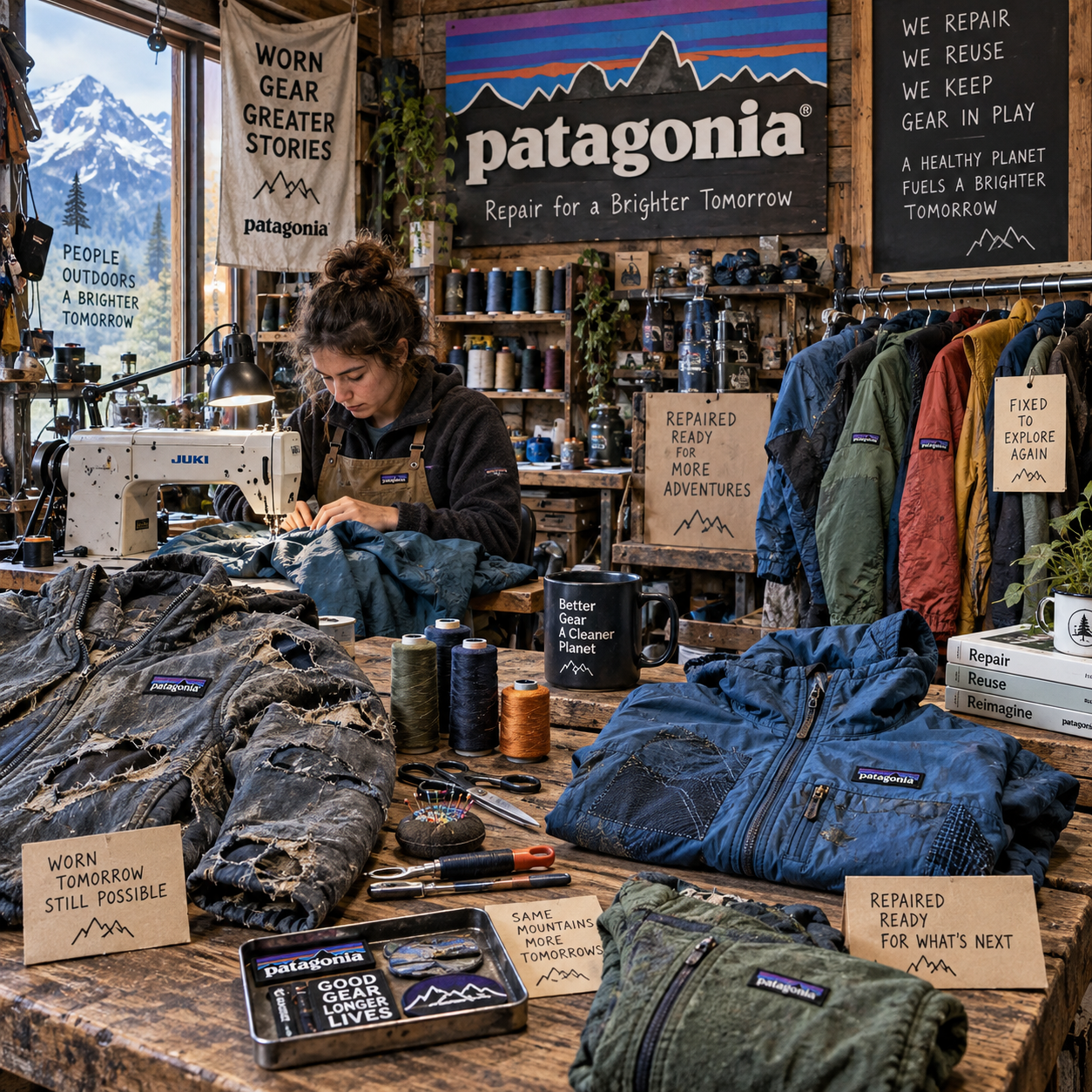
Patagonia’s Worn Wear program is a practical case study in how repair, reuse, and durable product design can work together. Rather than treating a garment as disposable after its first owner stops using it, the program creates several routes for keeping clothing in circulation: repair, care, trade-in, resale, and continued use.
Its significance lies in the connection between product design and customer behavior. A durable jacket still creates waste if it is discarded after a small tear, while a resale platform has limited value if products are poorly made or difficult to repair. Worn Wear addresses both sides of that problem, although it does not eliminate the environmental impacts of manufacturing, transport, cleaning, or new consumption.
What Is Patagonia’s Worn Wear Program?
Patagonia’s Worn Wear program is a repair, resale, trade-in, and education initiative designed to keep Patagonia products in use for longer. It supports the company’s broader approach to durable product design by treating extended product life as a central sustainability strategy.
The program emerged from a simple observation: the most useful garment is often the one a customer already owns. Worn Wear helps customers maintain Patagonia clothing, learn basic care practices, return eligible items they no longer need, and purchase used products through Patagonia’s resale channel.
Its activities commonly include:
- Garment repair: Customers can access professional repair services for issues such as rips, holes, broken zippers, and damaged seams.
- Product care: Patagonia provides guidance on washing, drying, stain treatment, and maintenance to protect performance and fabric life.
- Trade-in programs: Eligible used Patagonia products can be returned in exchange for credit, subject to condition and program requirements.
- Resale and secondhand clothing: Accepted items may be cleaned, assessed, repaired, and offered to another customer.
- Education: Repair events, instructional content, and visible mending help normalize maintenance rather than replacement.
This model fits circular design because it considers what happens after the original sale. The product is designed, sold, used, maintained, and potentially transferred to another owner. That is a more complete product life cycle than a linear model based on extraction, production, purchase, and disposal.
How Worn Wear Works
Worn Wear works as a customer journey from care and repair to trade-in and resale. The preferred route is continued use by the original owner; if that is no longer possible, repair or a second owner can extend the garment’s useful life.
1. Care and maintenance
The process begins before a problem appears. Customers receive product-care information intended to preserve fabric performance and reduce avoidable damage. Correct washing matters for technical clothing because excessive heat, unsuitable detergents, or aggressive drying can affect membranes, insulation, water resistance, and trims.
2. Repair and customization
When damage occurs, customers can send items for repair or seek help through repair centers and events. Patagonia’s repair services cover many common faults, while visible mending can become part of the garment’s identity. A patched shell may continue performing well even when it no longer looks new.
Repair is especially valuable when the damaged component is small but the rest of the product remains functional. Replacing a zipper, reinforcing a seam, or patching a hole can prevent the loss of an entire jacket or pair of trousers.
3. Trade-in and resale
When a customer no longer wants an item, a trade-in route can redirect it away from immediate disposal. Patagonia assesses returned products, and items that meet program criteria may be repaired, cleaned, and resold. Products that are unsuitable for resale may require another recovery route, depending on their material condition and construction.
For the next customer, resale provides access to Patagonia products at a lower price than new retail. For the original owner, trade-in can make responsible handover more convenient. Convenience matters because a circular option must compete with the ease of putting an unwanted garment in a closet, donation bin, or trash stream.
4. Continued use by another owner
Resale only delivers a product lifespan extension when the second owner uses the garment for a meaningful period. A transaction alone is not the environmental benefit. The benefit depends on whether secondhand purchase displaces a new purchase, whether the garment remains functional, and whether it would otherwise have been discarded or left unused.
Repair as a Circular Design Strategy
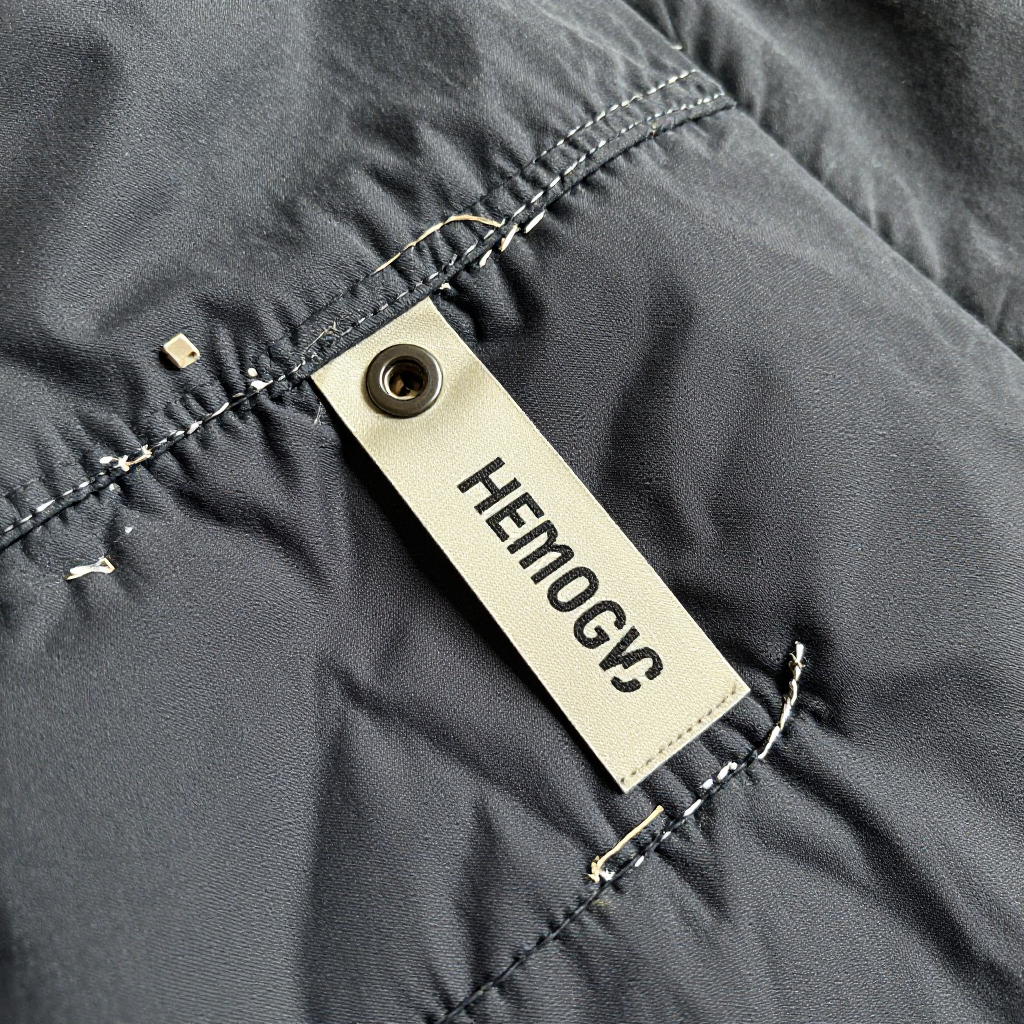
Repair supports circular design by preserving the value already embedded in a garment’s materials, energy, labor, and manufacturing. Extending use usually requires fewer new resources than replacing a functional product with a newly manufactured one, though the exact benefit depends on the repair, transport, washing, and replacement scenario.
Product durability is the foundation. Strong fabrics, reliable stitching, replaceable components, and construction that tolerates maintenance all increase the chance that a garment can survive multiple owners. Design teams should therefore evaluate more than appearance and first-sale performance. They should ask:
- Can common failure points be accessed without destroying the garment?
- Can a zipper, buckle, button, or drawcord be replaced?
- Will a patch adhere securely to the fabric?
- Can care instructions be understood and followed at home?
- Can the item retain value after visible wear?
This leads to a useful circular-design sequence: prevent, maintain, repair, reuse, then recover. Prevention means designing for durability. Maintenance protects performance. Repair restores function. Reuse gives the product another owner. Material recovery or recycling comes later, when continued use is no longer practical.
That order matters. Recycling can recover some material value, but it generally does not preserve the product’s original function as efficiently as continued use. A repaired rain jacket still performs the job for which its fabric, membrane, hardware, and labor were originally used.
The Program’s Impact on Products, Customers, and Waste
Worn Wear’s clearest potential impact is product lifespan extension: keeping usable garments active for longer can reduce premature replacement and delay textile waste. Its environmental and commercial effects should be assessed carefully because public program activity does not automatically equal verified waste prevention.
Product impact
Repair can preserve a high-value item when damage is localized. A jacket that receives a zipper replacement or patch may remain in service for years. Durable construction also improves resale potential because the item has a better chance of surviving its first owner.
Customer impact
Worn Wear changes the meaning of wear. Scratches, patches, and faded fabric can signal use rather than failure. That cultural shift matters because consumer behavior strongly influences garment turnover. If customers see maintenance as normal and secondhand clothing as desirable, they may keep products longer and become less dependent on frequent replacement.
Waste impact
Repair and resale can divert some garments from disposal, but the scale of textile waste reduction depends on behavior and system design. A trade-in does not guarantee that a customer will avoid buying a new item. Likewise, a secondhand purchase may supplement rather than replace a new purchase.
Claims should therefore distinguish between items repaired, items resold, and new purchases avoided. These are different measurements. A responsible evaluation would also examine repair success rates, average additional use time, resale retention, transport emissions, and the fate of products that cannot be resold.
Strengths and Limitations of the Worn Wear Model
The Worn Wear model is strong because it links durable products with practical services and customer education, but it faces limits in accessibility, cost, logistics, and scale. Repair and resale are useful circular tools, not automatic proof that a fashion system has become circular.
Key strengths
- It makes repair visible: Customers encounter repair as a supported service rather than an improvised last resort.
- It rewards durability: Products that survive repair and retain resale value have a stronger economic case for quality construction.
- It creates multiple use pathways: Care, repair, trade-in, and resale address different moments in the product life cycle.
- It supports behavior change: Education and storytelling can make long-term ownership more attractive.
Key limitations
- Access is uneven: Customers far from repair centers may face shipping costs, waiting periods, or limited local support.
- Repair economics can be difficult: Labor-intensive repairs may cost more than low-priced replacement garments.
- Resale requires demand: A used item has no circular pathway if customers do not want its size, style, condition, or performance.
- Operational complexity increases: Inspection, cleaning, inventory management, reverse logistics, and quality control require staff and infrastructure.
- The model is brand-dependent: Patagonia’s reputation, product quality, and customer base may not translate directly to every company.
The central caution is scale. A premium outdoor garment may justify professional repair because its materials and performance are valuable. The same service model may be uneconomic for an inexpensive, poorly made shirt. Other brands may need local repair partnerships, modular construction, digital care guides, or simplified return systems rather than copying Patagonia’s exact operation.
Lessons for Circular Fashion and Product Design
The main lesson from Worn Wear is that circularity must be designed as a connected service system, not added as a resale page after production. Brands should link durability, repairability, customer incentives, reverse logistics, and transparent measurement from the beginning.
- Design for the most likely failure points. Identify which components fail first and make them replaceable or reinforceable.
- Publish practical care instructions. Explain washing, drying, storage, and minor repairs in language customers can use.
- Make repair easy to access. Offer mail-in options, local partners, repair kits, or scheduled events.
- Build a realistic trade-in standard. Define accepted condition, pricing, inspection, cleaning, repair, and non-resale outcomes.
- Measure extended use rather than transactions alone. Track repaired items, resale duration, repeat ownership, and estimated replacement displacement.
- Design for emotional durability. A garment with a repair story can remain desirable even when it shows use.
Designers should also distinguish durability from overproduction. A long-lasting product can reduce replacement frequency, but producing more goods than the market needs still creates inventory and resource pressure. Circular design works best when product quality and production volume are considered together.
How Consumers Can Apply the Worn Wear Approach
Consumers can apply the Worn Wear approach by buying fewer durable products, caring for them correctly, repairing damage early, and choosing reuse before replacement. The most effective action is usually to extend the life of what is already in the wardrobe.
- Buy for the real use case: Choose construction, fit, and performance that match how often and where the garment will be worn.
- Learn the care label: Correct washing and drying can prevent avoidable damage and preserve technical performance.
- Repair early: A small tear or loose seam is usually easier to address before it spreads.
- Use local skills: Tailors, cobblers, community repair events, and sewing groups can handle many repairs without shipping.
- Consider secondhand first: Look for a used item before buying new, especially for durable categories such as jackets, backpacks, and outdoor equipment.
- Pass garments on responsibly: Trade in, resell, gift, or donate usable items while their condition still supports continued use.
A simple decision rule helps: keep, repair, reuse, recover. Keep the garment if it works. Repair it if the defect is localized. Reuse it through another owner if it no longer fits your needs. Consider recycling or material recovery only when continued use is no longer practical.
Frequently Asked Questions
What is Patagonia’s Worn Wear program?
Patagonia’s Worn Wear program supports garment repair, product care, trade-in, resale, and education. Its purpose is to keep Patagonia products in use longer and reduce premature replacement.
How does Patagonia’s repair and trade-in model work?
Customers can seek repair support for damaged products and return eligible used items through trade-in channels. Accepted items may be assessed, repaired, cleaned, and resold, while customers may receive credit according to program conditions.
How does Worn Wear support circular design?
Worn Wear supports circular design by connecting durable construction with maintenance, repair, secondhand use, and end-of-use pathways. It places continued use before recycling or disposal.
What are the limitations of repair and resale programs?
Repair and resale can be expensive and logistically complex. They also depend on product durability, customer demand, convenient access, and whether secondhand use actually replaces a new purchase.
Can other brands replicate the Worn Wear model?
Other brands can adopt its principles, but they should adapt the operating model to their products, price points, customer locations, and repair economics. Useful starting points include durable design, clear care guidance, local repair partnerships, and transparent impact measurement.